You can probably record a podcast yourself. Most experts can. You already talk about your work every day, and a microphone does not change that.
The harder question is what happens after recording. Who plans the next episode? Who edits the recording? Who writes the title and show notes? Who publishes it, on time, in a week when client work is busy? That work is where most business shows stall, not in the recording itself.
There are three common ways to handle it: do it yourself, hire an editor, or hire a done-for-you producer. Each fits a different kind of expert, and each breaks in a different place.
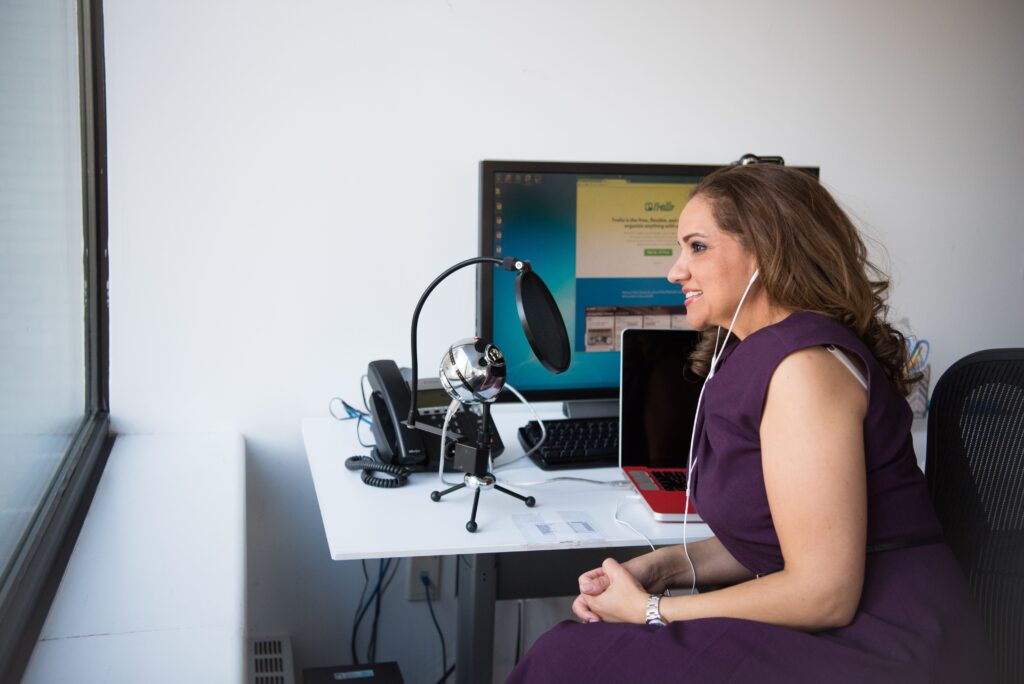
Option 1: Do it yourself
DIY means you do everything: plan, record, edit, write notes, publish, and promote, if you promote at all.
When DIY fits
DIY fits if you enjoy the production work, if you have regular time for it, and if you want to learn the craft. It also fits if your budget is tight and your show is occasional, not weekly. If you publish once a month and you like editing, DIY can work well.
DIY also fits as a learning phase. Recording a few episodes yourself teaches you what you like to talk about, how long you naturally talk, and what kind of show you actually want. That learning is useful even if you later hand production off.
Where DIY breaks
DIY usually breaks on time, not on talent. A week of client work, travel, or family commitments pushes editing to next week. Next week pushes publishing. A monthly show becomes an occasional show, then a stalled show.
It can also break on consistency. One episode sounds clean, the next sounds rushed, because the editing time was different. Listeners may not name that problem, but they notice when a show feels uneven.
A decision framework from Resonate Recordings names three related risks for DIY and hybrid production: time fragmentation, quality drift, and continuity risk. In plain terms: your time gets split across too many jobs, quality drifts when time is short, and the show stops when life gets busy. Those risks are worth naming, because they are the usual reason a good show stops, not a lack of ideas.
Option 2: Hire an editor
Hiring an editor is a middle step. You record, and an editor cleans up the audio, and sometimes writes notes or publishes, depending on the agreement.
When hiring an editor fits
Hiring an editor fits if you like planning and publishing, and you mainly want the audio work taken off your plate. It fits if you already have topics, you enjoy writing your own titles and notes, and you will reliably send recordings on schedule.
It also fits if your show is simple: one host, one conversation, no guests to coordinate, no complex editing. In that case, an editor can keep the audio clean without needing to shape the show.
Where hiring an editor breaks
Hiring an editor breaks when the work around editing is the real bottleneck. If planning topics is hard, if recording keeps slipping, or if writing notes and publishing keeps falling to the bottom of your list, an editor alone does not solve those jobs. You still own planning, coaching, notes, and publishing.
It can also break on feedback. An editor can make audio sound better, but an editor is not usually hired to tell you that a topic is weak, that an episode needs a clearer opening, or that your recording habit needs a simpler rhythm. That coaching and planning work is a different job.
Option 3: Done-for-you production
Done-for-you means a producer handles planning, coaching, editing, notes, and publishing, and your main job is to show up and talk.
When done-for-you fits
Done-for-you fits if your time is the constraint, and your expertise is the asset. You talk for an hour or two a month, and someone else turns that into a weekly show. It fits trust-based businesses, consultants, advisors, and service owners whose clients need to hear how they think, not just read a bio page.
It also fits if consistency matters more to you than control over every production detail. A done-for-you show is built to survive a busy month, because recording, editing, notes, and publishing are all someone else’s job, on a schedule.
At Expert Frequency, the Partnership is built that way: four episodes a month, up to 30 finished minutes each, published weekly, from one Riverside recording call a month of 1 to 2 hours in total. Topics, titles, and show notes are done for you, coaching sessions are included, and I check every episode for major issues and gaffs before it goes out.
Where done-for-you breaks
Done-for-you breaks if you want to control every detail of production yourself, or if you want to learn editing and publishing as a skill. In that case, handing it off will feel frustrating, even if the finished show is good.
It also breaks if you need a video-first show, or a show built around heavy script approval. At Expert Frequency, video and short-form clips are not included unless separately agreed, and the show is built on conversation, not on a line-by-line script approval process. If that does not fit how you work, a different producer, or DIY, may fit better.
A simple comparison
Here is the same show, handled three ways, in a normal busy month:
- DIY: You plan, record, edit, write notes, and publish. Time: several hours a month, spread across the month. Risk: editing and publishing slip first.
- Editor only: You plan, record, write notes, and publish. An editor edits the audio. Time: a few hours a month, plus coordination. Risk: planning and publishing still slip first.
- Done-for-you: You record on one call a month. A producer plans, coaches, edits, writes notes, and publishes. Time: 1 to 2 hours a month for recording. Risk: you have less hands-on control over production details, by design.
None of those is wrong. The question is which risk you would rather live with, and which job you actually want to keep.
What about cost?
Cost follows scope, as explained in Article 1 on done-for-you podcast production cost. Editing only costs less than editing plus publishing, which costs less than full production with planning and coaching.
At Expert Frequency:
- The Launch is $1,000 one time, for people who want setup and then want to run the show themselves, including DIY after setup.
- Podcast Partnership is $1,250 a month, with a 3-month minimum, at the founding rate. There are 5 founding spots in total. The next group after that is $1,500 a month, and founding clients keep their rate.
- Hosting is separate, at about $15 a month, set up in your name. You own the show, the feed, the files, and the audience.
If you want to learn DIY, The Launch gives you topic, format, gear, artwork, music direction, hosting setup, and first episodes planned, and then you take it from there. If you want done-for-you, the Partnership includes that full launch, plus four episodes a month, coaching, custom music, and a basic starter kit built around how you will actually record.
How to choose, honestly
Ask yourself three questions:
- Do I enjoy production work, or do I just want the finished show?
- In a busy month, which job will I drop first: planning, recording, editing, notes, or publishing?
- Do I want a producer who plans and coaches with me, or do I mainly want clean audio back?
If you enjoy production and have time for it, start DIY. If you enjoy planning and publishing but not editing, hire an editor. If you want to talk and have someone else handle the rest, talk to a done-for-you producer.
And if you are not sure, start with a conversation, not a contract. A good producer should be able to tell you, plainly, whether your show fits their model, and what would break if it does not.
If you want to talk through which fits you
Email me at ranger@expertfrequency.com. Tell me what you do, how much time you realistically have a month, and whether you want to learn production or hand it off. I will tell you whether the Partnership, The Launch, or neither fits, and I will point you to the Services page for the full details.
You can see those details on the Services page, learn more about me on the About page, and read the pricing breakdown in Article 1 if you want to compare scope and price side by side.